
For the second year, Ehlers-Danlos awareness is my goal for May
Last year I participated in my first Ehlers-Danlos Syndrome Awareness month with the goal of earning a pin for my efforts.
I won that pin. And there’s another this year in my sights.
For May 1st, our prompt given by the Ehlers-Danlos Society, is “Meet Me.”
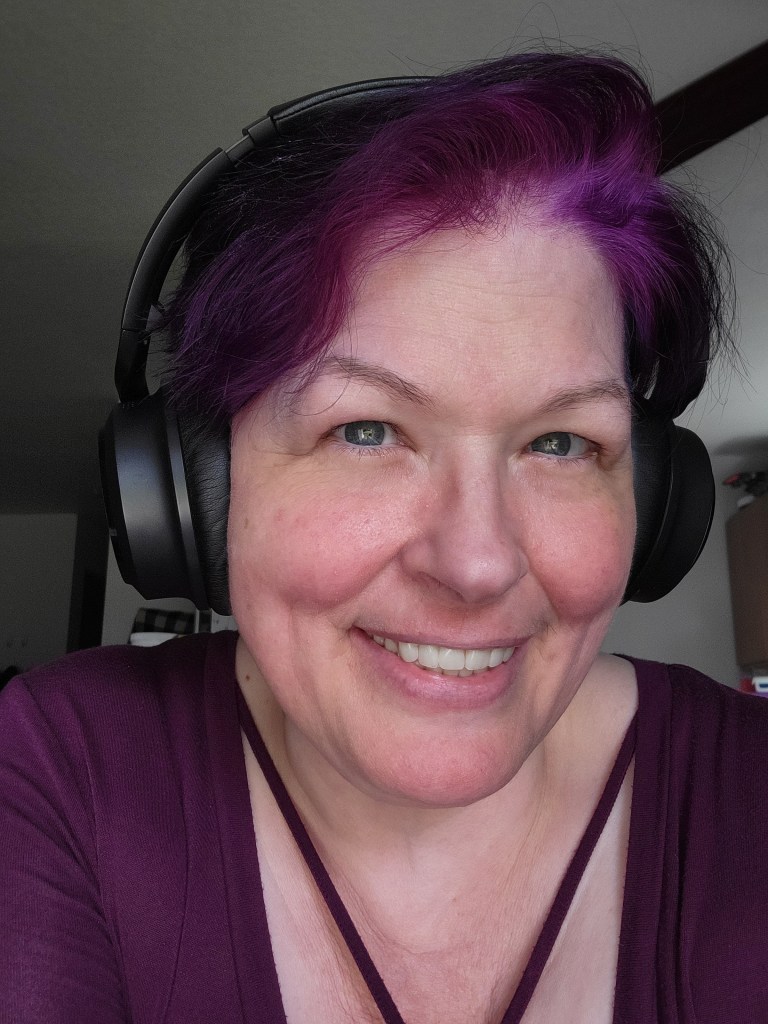
Who do I want you to meet? Who is this mysterious creature called “me?”
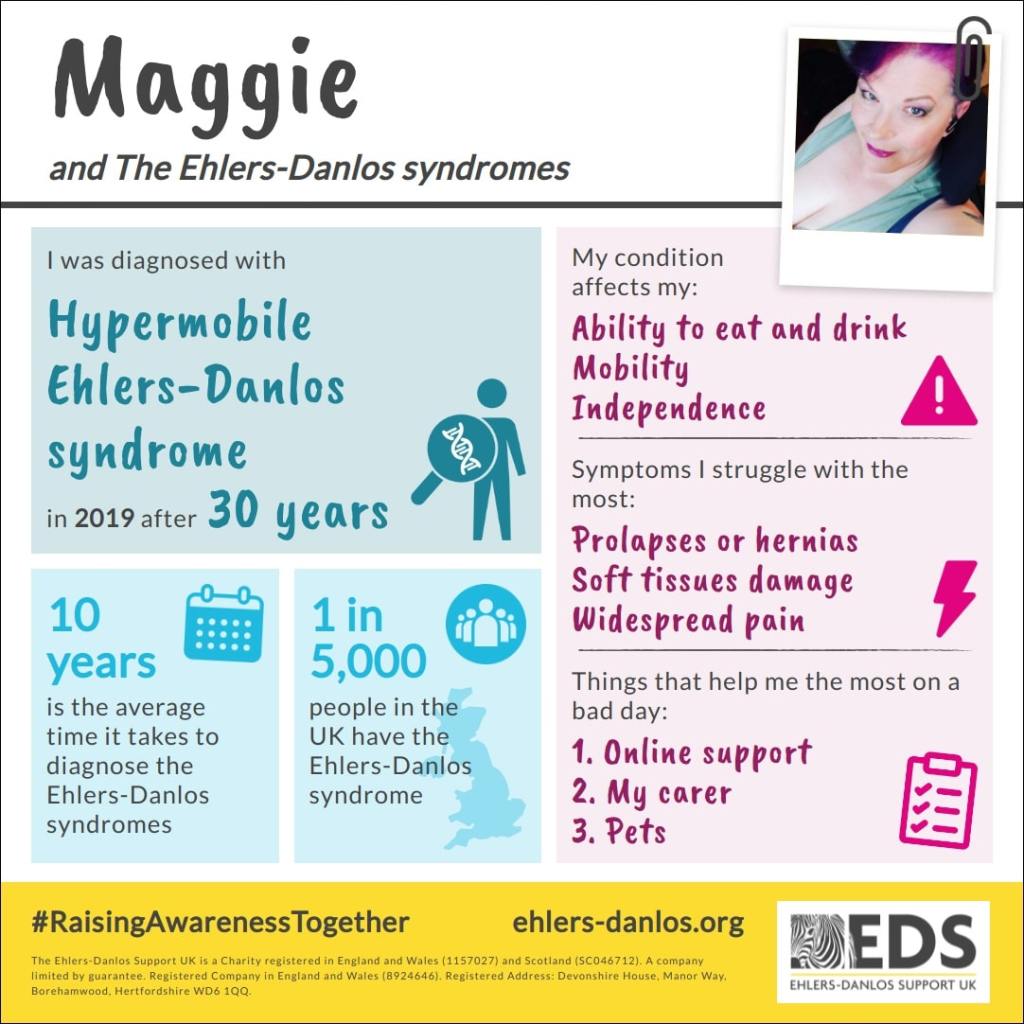
I am a 55 year old grandma. I’m a writer, I’m a creator and I’m an observer of this world and my place in it.
Over the past several years, I’ve gained profound understanding about my physical and mental differences that were born into my genetic makeup in 1966. These have led to a greater understanding of why I do the things I do the ways I do them.
Throughout my young adulthood, I was plagued by a myriad of health issues. Days off of work gradually became months and by 2005 I was medically retired.
The diagnoses that caused those absences never had a clear root, but once the immediate issue cleared, doctors stopped investigating. I was left with the impression my body didn’t act the way other bodies did and I didn’t know why.
I’ve always maintained that everything happens for a reason, and there seemed to be a subtle exposition in the reading materials I sought to investigate the fluoroquinolone Toxicity: nearly everyone effected had an underlying connective tissue condition.
Finally, in December 2019, I received the clinical diagnosis of Ehlers-Danlos Syndrome. Since I’m not of childbearing age, and there are no obvious signs of vascular EDS in my collection of symptoms, I am not eligible for genetic testing to verify what type of Ehlers-Danlos Syndrome I carry.
It is assumed, as hypermobile (hEDS) is the most common, that is the type I have. But that is only a clinical assumption. There are connective tissue panels that are available over the counter by DNA labs which I may consider at a future time.
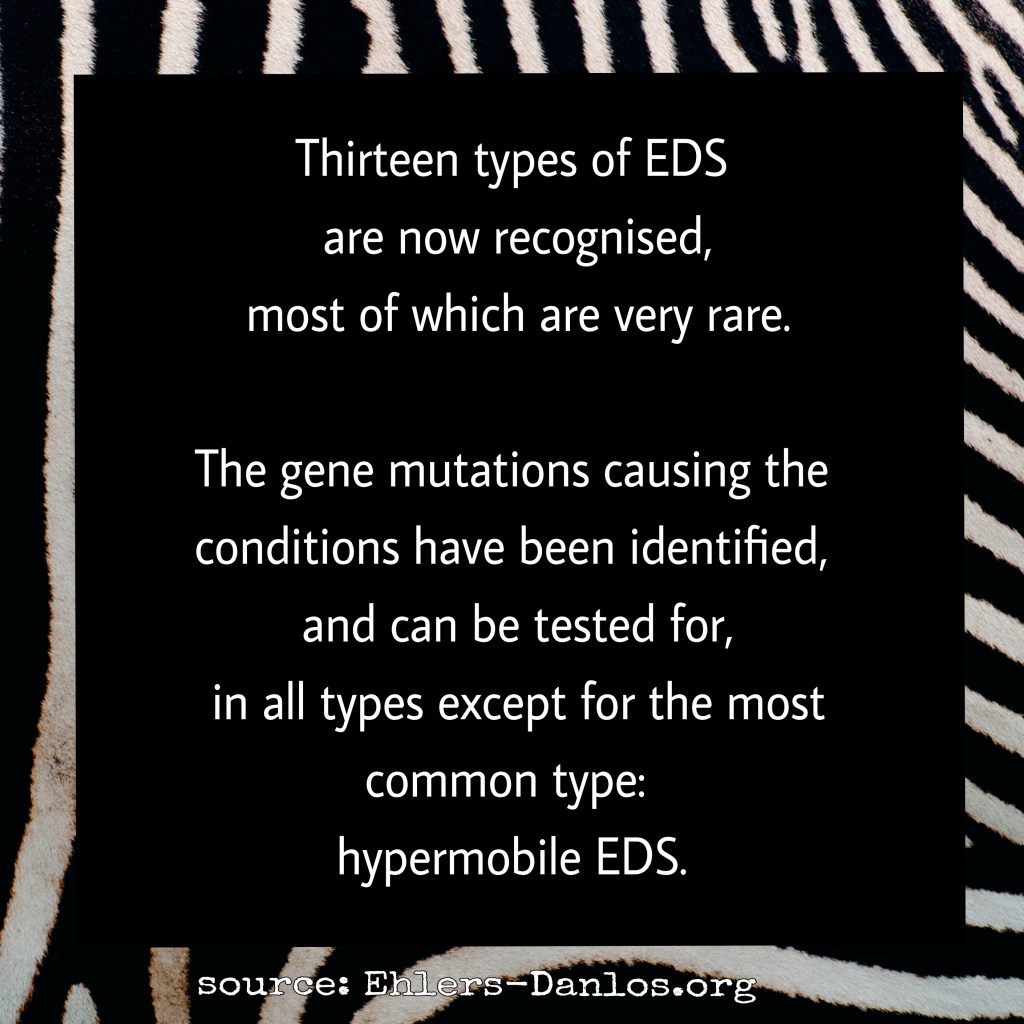
What is hypermobile Ehlers-Danlos Syndrome (hEDS)?
I’ve written about my pathway to diagnosis, but let me explain a bit about the symptoms that plagued me during my young adult life. Doctors notoriously gaslight young women about their pain and medical symptoms and I was no exception to that rule.
I missed months of school as a teenager for pelvic pain. Months. It felt like my innards were being pulled out by gravity.
It still does when I stand. That was a symptom that no one could figure out. That is, until the day after my youngest child was born and my uterus decided to follow suit.
Pelvic floor collapse, including the prolapse of my uterus, bladder and rectum. There was a reason I always felt like my insides were falling out: They were. They did.
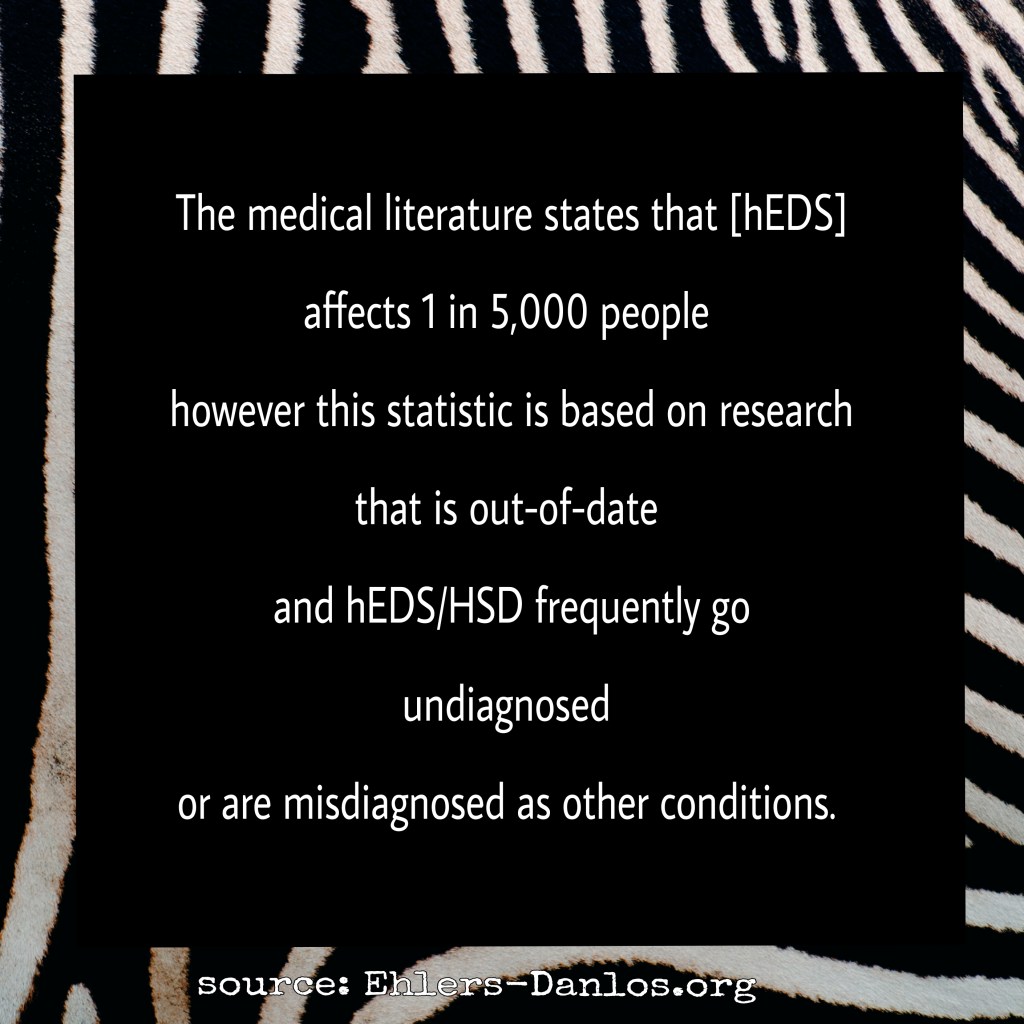
It is those tissues that you don’t see from the outside of my body that seem to be the most effected by hEDS. Although like most people with EDS, I’ve been “pet” by friends and intimate partners exclaiming how unbelievably soft my skin is, and I have a large number of chronically unstable joints, also like most people with hEDS- I don’t have any obvious impairments looking at me.
That’s the most incideous part of Ehlers-Danlos Syndromes: From the outside we can look perfectly able, healthy and without any physical impairment of any type. And that is completely wrong. Unstable joints are mistaken for extra flexibility and injuries are all too common when exploring those abilities.
Stay tuned this month, I’ll be publishing more than normal as part of this social media challenge. If there are something related to Ehlers-Danlos Syndromes that you are curious about, please let me know so I can address it in a future post!
 M.E. Slighte